Why VPNs and Incognito Mode Can't Keep You Anonymous
Content
- The Illusion of Private Browsing and VPNs
- Where VPNs Fall Short
- What is Browser Fingerprinting?
- The Risks of a Static Digital Fingerprint
- How NOID Achieves True Digital Anonymity
- Complete Digital Footprint Substitution
- Built-in Security and Proxies
- Disposable Browsers and Local Encryption
- Ideal Use Cases for Complete Anonymity
- Take Control of Your Online Identity
Most people assume their internet activity is private as long as they take a few basic precautions. You might open a private browsing window when checking sensitive information. Perhaps you even pay for a virtual private network service to mask your internet protocol address. These steps feel like a solid defense against tracking, surveillance, and intrusive advertising.
Unfortunately, the technology used by advertisers, data brokers, and tech giants has evolved far beyond these simple countermeasures. While a virtual private network encrypts your traffic and hides your location, it leaves a massive vulnerability wide open. Your device itself constantly broadcasts a highly unique set of characteristics to every server you visit.
This tracking method is known as browser fingerprinting. It allows organizations to track your movements across the internet, build detailed profiles of your behavior, and correlate your supposedly anonymous browsing with your actual identity. To truly protect your data and reclaim your digital freedom, you need a different approach entirely.
The Illusion of Private Browsing and VPNs
Many users mistakenly believe that standard privacy tools offer complete invisibility. Understanding the limitations of these common defenses is the first step toward achieving actual digital security.
Where VPNs Fall Short
A virtual private network routes your connection through a secure server, substituting your actual IP address with one belonging to the server. This prevents websites from knowing your physical location and stops your internet service provider from seeing which sites you load.
However, an IP address is only one piece of the tracking puzzle. When you connect to a website, your browser hands over a massive amount of technical information. A virtual private network does not stop this data exchange. Essential data, such as your time zone, language preferences, operating system, and hardware details, remains entirely visible to the sites you visit.
What is Browser Fingerprinting?
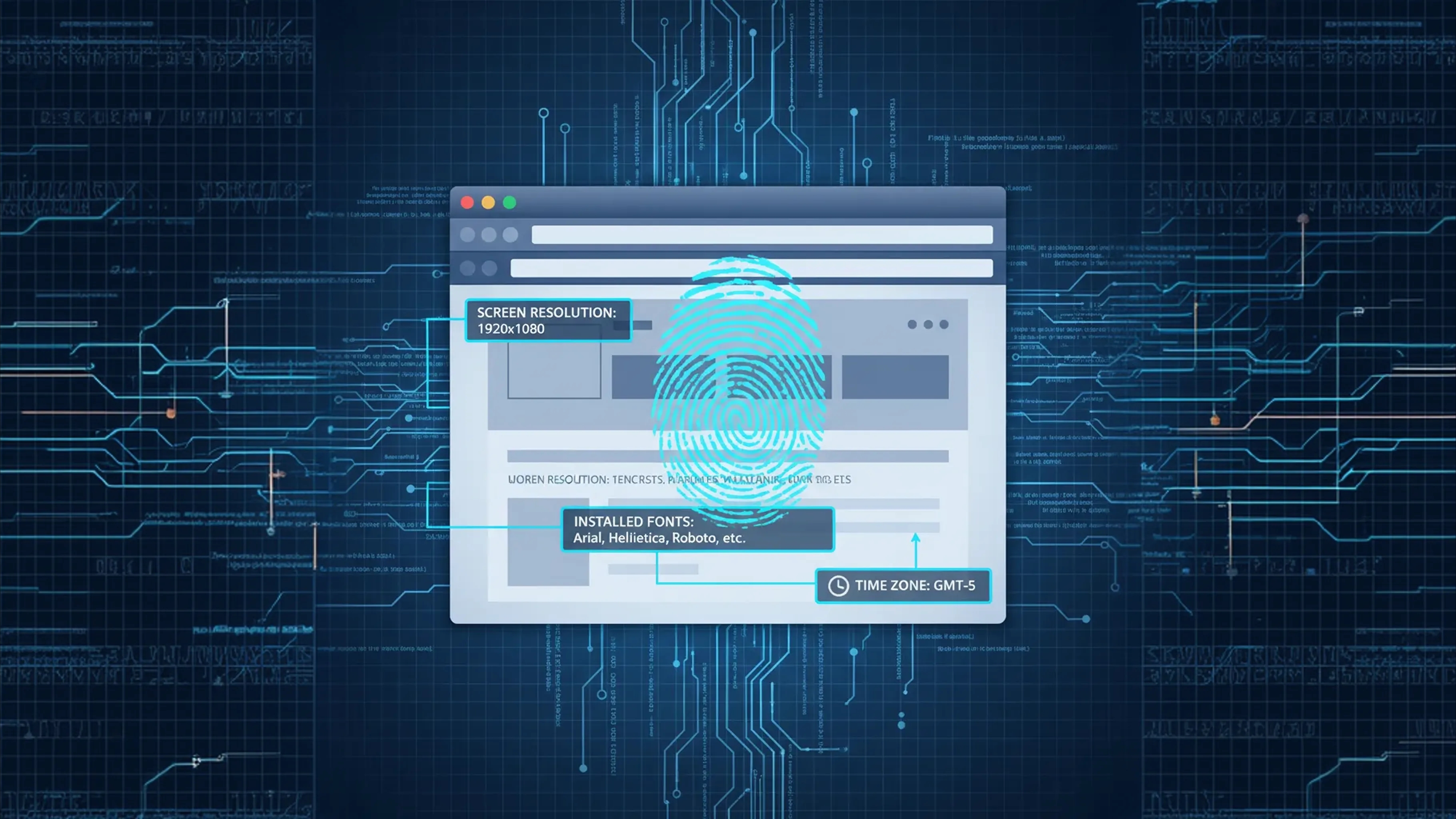
Every time you load a webpage, your browser executes background scripts that ask your device for specific technical details. This helps the website render correctly on your screen. The site checks your screen resolution, installed fonts, browser extensions, audio hardware, and graphics rendering capabilities via tools like WebGL and HTML5 Canvas.
When combined, these seemingly innocent data points create a highly specific profile of your machine. This is your digital fingerprint.
A recent study highlighted by Hackaday demonstrated the frightening accuracy of this tracking method. Researchers analyzed 83 identical work laptops in a single office environment. Despite having the exact same hardware, operating system, and general browser configuration, every single laptop generated a completely unique digital fingerprint. If identical office computers can be singled out, a personal device stands out even more.
The Risks of a Static Digital Fingerprint
Uniqueness itself is not inherently dangerous. The real threat lies in remaining the exact same kind of unique across different websites and over long periods.
If you use the same browser configuration for both anonymized activities and regular browsing, tracking companies can easily link the two. Let us say you browse a medical forum using a virtual private network, trying to keep your health questions private. Later, you log into your personal social media account without the virtual private network. Because your browser fingerprint remains static, data brokers can confidently connect your anonymous medical research directly to your real identity.
Clearing your cookies will not mitigate this problem. Your digital fingerprint is saved on external servers, completely outside of your control. To stop this tracking, you must fundamentally change the information your device broadcasts to the web.
How NOID Achieves True Digital Anonymity
Because standard browsers fail to prevent fingerprinting, privacy-conscious users require a dedicated tool designed to break the tracking cycle. NOID is an anonymous, high-speed browser built specifically to provide complete digital footprint substitution.
Complete Digital Footprint Substitution
Instead of just changing your IP address, NOID masks your computer's data entirely. It provides a comprehensive substitution of all your browser parameters. This allows you to exist online as thousands of unrelated identities simultaneously. It feels exactly like accessing the internet from a brand new computer each time, but you only need to use one application.
Built-in Security and Proxies
Standard browsers require you to install third-party ad blockers and security extensions, which ironically make your fingerprint more unique. NOID comes completely free of the tracking tools found in standard software. It features a built-in ad and tracking blocker right out of the box, allowing you to avoid annoying advertisements and hidden data scrapers.
Furthermore, NOID provides access to 14,000 built-in proxies across more than 50 global locations, along with built-in TOR network integration. This means all types of secure connections are available immediately upon launch.
Disposable Browsers and Local Encryption
True security requires protection on both sides of the screen. NOID ensures your local data remains secure through robust encryption. The application features quick lock and automatic sign-out functions if your connection drops, alongside authenticator support for secure logins.
For users handling highly sensitive tasks, NOID offers one-time disposable browsers. These single-use environments store absolutely no data, ensuring you leave zero traces behind once your session ends.
Ideal Use Cases for Complete Anonymity
Ideal Use Cases for Complete Anonymity
Protecting Marketplace Accounts: E-commerce sellers frequently use multiple accounts to manage different brands. NOID allows users to separate these accounts securely without triggering platform bans linked to hardware fingerprinting.
Secure Web3 Interaction: Cryptocurrency and blockchain users can isolate their wallets and decentralized application interactions, preventing malicious actors from profiling their digital assets.
Open Source Intelligence (OSINT): Security researchers and journalists can investigate threat actors or sensitive topics without revealing their organizational identity or personal hardware details.
Bypassing Regional Restrictions: Users living under strict digital censorship can use isolated identities to access the open internet freely and safely.
Take Control of Your Online Identity
Relying on outdated privacy methods leaves your personal data exposed to constant harvesting and correlation. A static digital fingerprint severely compromises your ability to browse the internet freely and securely.
Security implies diversification. By separating your online activities into thousands of independent, encrypted browsers, you reclaim your right to digital freedom. NOID makes this process effortless, offering incredible opportunities for safe surfing, ad-blocking, and footprint substitution.
Stop letting third parties track your every move. You can start protecting your online identities today with a 7-day free trial, and continue your secure browsing experience for just $0.66 per day. Download NOID and experience what true digital anonymity actually feels like.